
Hairline Restoration for Women — Yes, Women Get Hair Transplants Too
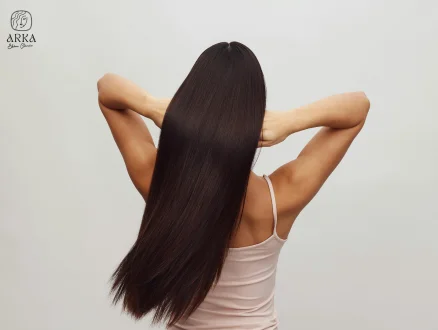
She noticed it first on her pillow. Then in the shower drain. Then, in photographs, the way the light caught her scalp along the parting she had kept the same way for twenty years. For most women, hair loss is not just a cosmetic inconvenience. It is a quiet, persistent blow to confidence, identity, and the everyday sense of self. If that description feels familiar, here is something the beauty industry has rarely told you: female hair transplant is real, effective, and growing at a remarkable pace in cities like Gurgaon. At Arka Clinic, Sector 49, Gurgaon, women now form a significant and growing share of hair restoration consultations — and the results speak for themselves. This blog post is your complete guide. From understanding why women lose hair differently, to how hairline restoration actually works for female patients, to what you can expect at every step of the journey. Why Women Lose Hair — And Why It Is Different From Men When people picture hair loss, they typically picture a receding hairline on a man. That image, while accurate for millions of men, leaves out an enormous group of people who are quietly struggling with the same problem — women. Female hair loss tends to be diffuse rather than patterned. Instead of a clearly receding front or a bald crown, women often experience a gradual thinning across the scalp, a widening part, or a reduction in hair density along the hairline. The underlying causes vary, and understanding yours is the first step. The Three Most Common Causes of Hair Loss in Women Female Pattern Hair Loss (FPHL): This is the most common cause. Triggered by genetics and hormonal changes — particularly around menopause, post-pregnancy, or thyroid disruption — FPHL causes progressive thinning across the top and crown of the scalp. The frontal hairline is usually preserved, but density falls significantly behind it. Traction Alopecia: This is a form of hair loss caused by prolonged tension on the hair follicles. Years of tight ponytails, braids, weaves, or extensions gradually damage the follicles along the temples and hairline. Left untreated, that damage becomes permanent. Many women in their 30s and 40s presenting at hair loss treatment clinics in Gurugram cite traction alopecia as their primary concern. Post-Procedural or Scar-Related Hair Loss: Facelifts, surgeries, burns, or accidents can leave visible scars where hair no longer grows. Hairline restoration in these cases involves transplanting donor grafts directly into scar tissue — a technically demanding procedure with excellent outcomes when performed by an experienced surgeon. Other contributing causes include chronic stress (telogen effluvium), nutritional deficiencies, autoimmune conditions like alopecia areata, and prolonged use of certain medications. A comprehensive consultation at Arka Clinic includes a detailed medical history review precisely because the cause shapes the treatment plan. Can Women Actually Get Hair Transplants? Yes. Absolutely. The hesitation is understandable — hair transplants have historically been marketed almost exclusively to men, and the imagery around them reflects that bias. But the procedure is neither gender-specific nor exclusive. However, the surgical approach is meaningfully different for women. Here is why: Donor Area Assessment: Women typically cannot shave their entire head for surgery, which limits some FUE (Follicular Unit Extraction) techniques. Surgeons at Arka Clinic are experienced in unshaven or partial-shave FUE, which allows grafts to be harvested discreetly from the back or sides of the scalp without visible evidence of surgery. Diffuse vs. Patterned Loss: Because female hair loss is often diffuse, surgeons must carefully evaluate which areas of the scalp are truly stable donor zones — meaning those follicles are not themselves susceptible to future loss. Transplanting from unstable zones can lead to poor long-term results. Hairline Design: Female hairlines are architecturally different from male ones. They tend to be lower, rounder, and more irregular along the edges. A skilled surgeon designs the new hairline to match natural feminine proportions — not a straight line, not a mathematical formula, but an organic result that looks like it was always there. Density Goals: Women typically require higher follicle density in the transplanted zone for results to look natural. The operative plan accounts for this from the start. At Arka Clinic, Sector 49, every female patient undergoes a dedicated pre-surgical assessment that maps the scalp, evaluates donor density, and models the expected aesthetic outcome before a single graft is placed. The Arka Clinic Approach to Female Hairline Restoration in Gurgaon Arka Clinic operates as a dedicated skin and hair clinic in Gurgaon, combining dermatological expertise with cosmetic surgery precision. For women seeking hairline restoration in Sector 49 or anywhere in Gurugram, the clinic offers a structured, transparent, and results-oriented process. Step 1: Consultation and Scalp Analysis The first appointment is a conversation, not a sales pitch. The dermatologist reviews your medical history, examines your scalp under magnification (trichoscopy), assesses donor hair density, and discusses your goals. You will leave this session with a clear picture of whether you are a suitable candidate and what realistic outcomes look like. Step 2: Customised Treatment Planning Not every woman presenting with hair loss needs or should pursue a transplant immediately. Some benefit more from a combination of PRP (Platelet-Rich Plasma) therapy, topical treatments, or low-level laser therapy at an earlier stage. For those who are surgical candidates, the plan specifies the technique, graft count, target zones, and session structure. Step 3: The Surgical Procedure Arka Clinic performs both FUE and FUT techniques, with FUE being the standard approach for most female patients due to its minimal scarring profile. The procedure is performed under local anaesthesia and typically takes four to eight hours depending on graft count. You remain awake and comfortable throughout. The extracted follicular units are kept in a temperature-controlled preservation solution and implanted individually using micro-incision techniques that ensure natural angulation and spacing. Step 4: Recovery and Follow-Up The immediate post-operative period involves mild swelling and a degree of redness that typically resolves within a week. Most women return to work within five to seven days. The transplanted
Before You Impress Someone Else, Impress Yourself

In a world driven by social media and high-definition cameras, we are constantly performing for an audience. We style our hair for the boardroom, groom ourselves for social gatherings, and pose for the perfect “like.” But have you ever stopped to consider the most important person in this equation? True confidence comes when you prioritize your own reflection, and choosing Hair Restoration Arka Clinic is the first step toward that inner satisfaction. When you invest in your appearance for yourself, you stop performing and start living with genuine authority. True confidence isn’t built on the compliments of others; it is built on the quiet satisfaction of looking in the mirror and loving who you see. At Arka Clinic, we call this the power of Self-Impression. It is the foundation of a life lived with authority, ease, and unapologetic self-assurance. The Psychological Connection Between Hair and Identity Hair is more than just protein strands; it is a universal symbol of health, youth, and vitality. When hair loss begins—whether it is a receding hairline, a thinning crown, or diffuse shedding—it isn’t just your appearance that changes. Your internal narrative changes too. In a fast-paced hub like Gurgaon, the pressure to look vibrant is immense. Hair thinning can lead to what psychologists call “Social Fatigue.” This is the mental exhaustion of constantly worrying about “bad angles,” avoiding harsh overhead lighting, or dreading the wind. Addressing hair loss isn’t about vanity; it’s about reclaiming your mental bandwidth. When you impress yourself, you stop performing and start living. Why Your Scalp Health is the “Foundation” of Beauty At Arka Clinic, we often use the “Garden Metaphor.” If you want a beautiful garden, you don’t just look at the plants; you look at the soil. Your scalp is the soil for your hair. Environmental factors in Delhi NCR, such as high pollution levels and hard water, can lead to scalp inflammation and clogged follicles. This “congested” environment prevents even the strongest hair from growing. Our first step is always a deep clinical analysis to ensure the “soil” is healthy enough to support the “seeds.” Comparing Modern Hair Solutions: A Comprehensive Look Choosing a hair treatment can be overwhelming. To help you navigate your options, we have organized the most effective 2026 treatments into this clear comparison. Feature Growth Factor Therapy (GFC) FUE Hair Transplant Scalp Micropigmentation Primary Goal Controlling hair fall & thickness Filling bald patches & hairlines Creating a “buzz-cut” look Invasiveness Non-surgical / Injections Minimally Invasive Surgery Non-surgical / Medical Tattoo Recovery Time Zero (Lunchtime procedure) 3 to 7 days 1 to 2 days Visible Results 3 to 4 months 6 to 12 months Immediate Best For Early thinning & volume Advanced balding Total baldness / Scar covering The Arka Clinic Philosophy: Invisible Artistry The biggest fear most people have regarding hair restoration is looking “artificial.” We’ve all seen the stiff, “doll-like” hairlines of the past. At Arka Clinic, we utilize a philosophy called Invisible Artistry. Natural Hairline Architecture: A natural hairline is never a perfectly straight line. It has “macro-irregularity” and “micro-irregularity.” Our surgeons meticulously place grafts in a staggered, zigzag pattern that mimics the way your hair naturally grows. We ensure that the finest, single-hair follicles are placed at the very front, with denser grafts behind them for volume. Strategic Density Management: It’s not just about how many hairs we move; it’s about where we put them. We prioritize the “aesthetic zones”—the areas people see first during a conversation. By strategically placing grafts, we can create the illusion of a full head of hair even if your donor area is limited. Deep Dive: How Growth Factor Therapy (GFC) Works If you are in the early stages of thinning, GFC is a revolutionary option. Unlike older, less concentrated methods, GFC is a pure, highly potent solution. We extract a small amount of your blood and use a specialized kit to isolate only the growth factors. Why GFC is the Gold Standard in 2026: No Red Blood Cells: This reduces inflammation and pain significantly compared to traditional PRP. Direct Stimulation: It delivers a high concentration of cytokines directly to the hair bulb to “wake up” dormant follicles. Predictable Results: Because the process is standardized, we can offer more consistent outcomes for our patients in Gurgaon. The Patient Journey: What to Expect at Arka Clinic Knowing what happens behind the clinic doors can ease your anxiety. We pride ourselves on a transparent, patient-first process. 1. The Digital Scalp Analysis: We begin with a high-magnification Tracheoscopy. This allows us to see your follicles, scalp skin health, and hair thickness in microscopic detail. This data-driven approach ensures we don’t guess—we know exactly which treatment will work for you. 2. The Custom Design Phase: We sit with you to draw your new hairline. We consider your face shape, your age, and how your hair will naturally age over the next twenty years and design for your future, not just for today. 3. The Procedure Day: Our Gurgaon clinic is designed for ultimate comfort. During a transplant, you are in a luxury recliner, watching your favorite shows or listening to music. Our team ensures the environment is sterile, calm, and professional. 4. Post-Treatment Support: We don’t “ghost” you after the procedure. Every patient receives a 12-month follow-up plan, including specialized shampoos and growth boosters, to ensure every single graft thrives. Daily Rituals for “Self-Impression” and Hair Health Professional treatments are the foundation, but your daily habits are the “maintenance” that keeps your results looking fresh. The Hard Water Solution: Gurgaon’s hard water can leave mineral deposits that make hair brittle. Consider a shower filter or a final rinse with bottled water to protect your follicles. Protein-First Nutrition: Your hair is made of keratin (protein). Ensure your diet includes eggs, lentils, lean meats, and biotin-rich nuts. Stress Management: High cortisol levels can push hair follicles into a “resting phase,” leading to shedding. Incorporating even 10 minutes of meditation can help maintain your hair density. 💡 Frequently Asked Questions Is
